How to Finance a Home Remodel in Bucks County PA: Your Options and the One Step Most Homeowners Skip
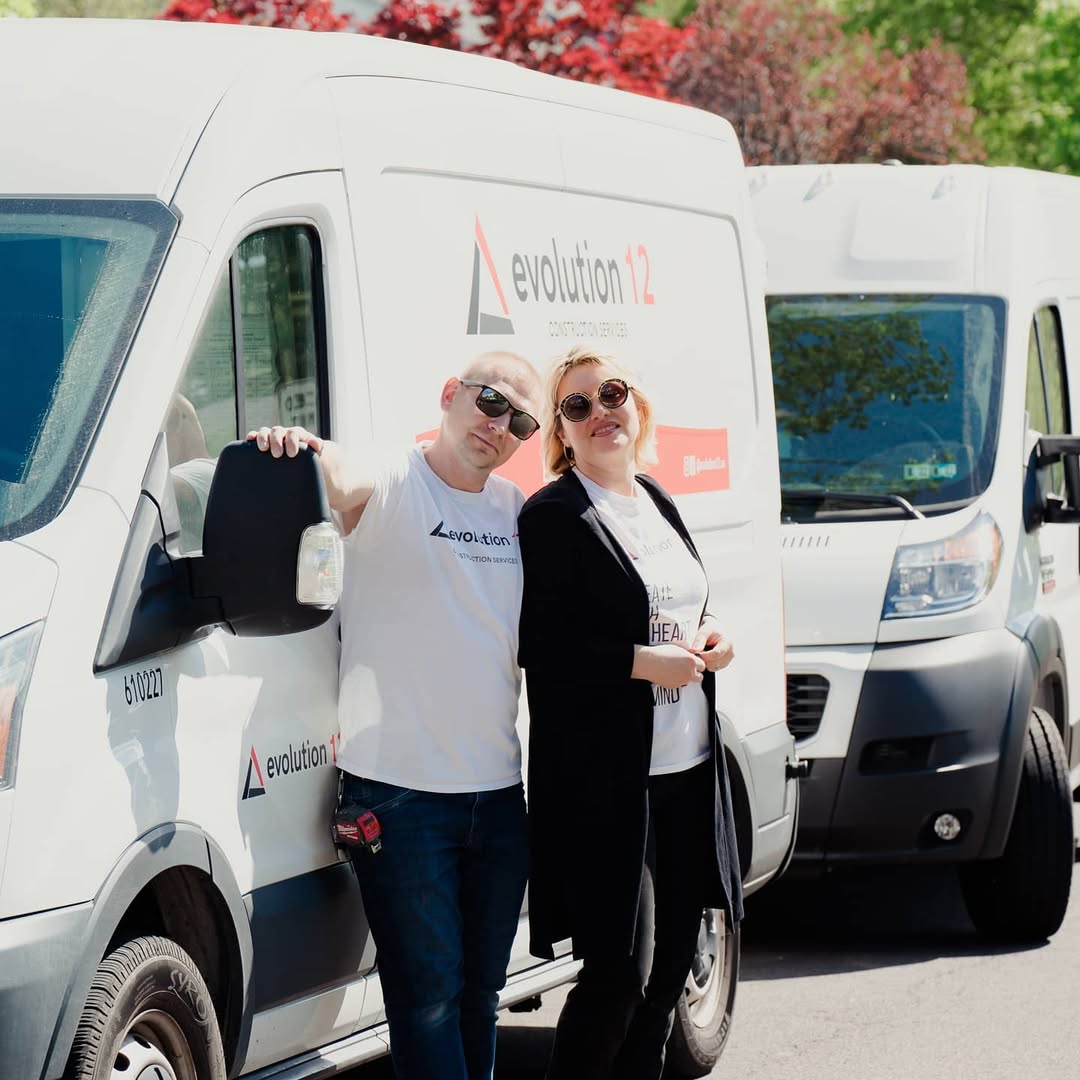
By Kanstantsin Bychak, Owner, Evolution 12 General Contractor
Most people call me about their kitchen or bathroom before they have figured out how they are going to pay for it. That is normal. But over 25 years of remodeling homes, I have learned that the order you do things in matters more than people expect. The homeowners who handle the money question early are calmer, they make better decisions, and they almost never get stuck halfway through a project.
So this post is the financing conversation I wish I could have with every homeowner in Huntingdon Valley, Abington, Doylestown, and Newtown before we ever talk about cabinets or tile. I am going to walk through your real options, give you honest ranges for what different projects cost, and explain the one step most people skip that causes the most headaches later.
One thing first, because it sets the tone for everything else.
I make nothing from recommending financing
When I point a homeowner toward a financing option, I do not get a referral fee. No spiff. No cash back. No kickback of any kind. The financing companies I mention are completely separate from Evolution 12. I am not a lender and I do not pretend to be one.
I tell you this up front because the remodeling industry has earned some of its bad reputation honestly. You should be suspicious of any contractor who pushes one specific loan hard. When a contractor only wants you to use "their" financing, ask yourself why. In my case there is nothing in it for me either way. I recommend options because a homeowner who can comfortably pay for the work is a homeowner who ends up happy with the result. That is the whole reason.
With that out of the way, here are the ways people actually pay for remodels around here.
Your real options for paying for a remodel
There is no single best answer. The right choice depends on how much equity you have, your credit, the size of the project, and how fast you want to move. Here are the common paths, with the honest trade-offs.
Cash or savings. The cleanest option if you have it. No interest, no application, no lender. Plenty of homeowners in places like Yardley, Upper Makefield, and Newtown pay cash for a bathroom and finance only the part that stretches them. You do not have to finance the whole project. You can finance the gap.
Home equity line of credit (HELOC). A revolving line secured by your house, usually at a lower rate than unsecured borrowing because the house backs it. This tends to make sense for larger projects and for homeowners who have built up real equity over the years, which describes a lot of long-time owners in Abington, Jenkintown, and Glenside. The downsides: it puts a lien on your home, the rate is often variable, and it can take a few weeks to set up. If you want the lowest cost of borrowing and you have the equity and the patience, this is often the smart pick.
Home equity loan. Similar to a HELOC, but it gives you a fixed lump sum at a fixed rate instead of a revolving line. Good when you know your number and you want predictable payments.
Cash-out refinance. You replace your existing mortgage with a larger one and take the difference in cash. This only makes sense in certain rate environments, and it resets your whole mortgage, so it is a bigger decision than the others. Worth a conversation with a mortgage professional before you go this route.
Personal or home improvement loan. An unsecured loan based mostly on your credit. No lien on your house, faster to get, but the rate is usually higher than a HELOC. This is the path for homeowners who do not have much equity yet, or who simply do not want to borrow against their home. If you searched something like a remodeling loan with no equity, this is the category you are looking at.
Contractor-arranged third-party financing. This is where a service like Acorn Finance comes in. It is a tool that lets you check your rate across a network of lenders in about a minute without affecting your credit score, with loan amounts starting around $15,000. Evolution 12 works with Acorn and a group of lending partners, but again, they are a separate company and I earn nothing from it. It is just a fast, low-friction way to see what you would qualify for. I will explain how it works in practice next.
How a tool like Acorn actually works in practice
Here is the honest version, from the contractor side of the table.
You answer a short set of questions and the tool checks your rate. The pre-qualification does not ding your credit, so there is no harm in looking. Within a minute or so you can see whether you qualify and at roughly what rate.
Now the part nobody likes to say out loud: your credit score does most of the work. If you have a strong credit score, you are likely to get a reasonable rate and a real range of options. If your credit is in rough shape, you will probably either be denied or offered a loan at a high percentage that I would not want you to take. That is not the tool being unfair. That is just how lending works. I would rather you know that going in than find out after you have gotten your hopes up.
So if your credit needs work, the most valuable thing you can do is spend a few months improving it before you borrow. A better score can be the difference between an affordable monthly payment and one that makes you resent the project.
What loan size matches what project
People always want to know how much they should be prepared to borrow. The honest answer is that it depends on the scope, but here is how it usually breaks down. Treat every number as a range, because layout changes, material choices, and what we find behind your walls all move the final figure.
A partial bathroom remodel: some homeowners just need a quick loan in the $10,000 to $20,000 range to cover part of a bathroom project and pay the rest from savings. You do not always need to finance the whole thing.
A full master bathroom: a complete master bath generally runs in the $18,000 to $45,000 range, depending on tile work, whether plumbing has to move, and the fixtures you choose. Moving plumbing and doing custom tile is what pushes a bathroom toward the top of that range. Swapping fixtures without moving anything keeps it lower.
A full kitchen gut: a complete kitchen remodel typically lands in the $35,000 to $80,000 range, driven by cabinet scope, countertop material, and whether you are changing the layout. Keeping the existing footprint and choosing semi-custom cabinets sits at the lower end. Moving walls, going custom, and adding high-end appliances climbs toward the top.
An addition: these vary the most. To give you a real example, one homeowner came to us with an addition in the $60,000 to $70,000 range and used financing to help cover it. Additions swing widely based on foundation work, size, and how the new space ties into the existing house.
The point is to match the borrowing to the scope before you fall in love with a design. It is a lot easier to choose finishes when you already know your budget ceiling.
The one step most homeowners skip
Here is the mistake I see more than any other: people explore financing too late.
They sign a contract, the project starts, the first payment comes due, materials need to be ordered, and only then do they start looking at loans. Now they are trying to line up money while the clock is already running. That is the worst possible time to shop for a rate, because you are under pressure and you cannot walk away to compare options.
Do it the other way around. Sort your financing before you sign anything. Honestly, the wisest move is to do it before you even get your estimate. It is not required, and a pre-qualification is not a commitment, but there is a real advantage to walking into your estimate already knowing what you can comfortably borrow. You negotiate from a position of clarity. You make scope decisions based on real numbers instead of hope. And when you are ready to move forward, you move forward without scrambling.
Checking your rate ahead of time costs you nothing and does not affect your credit. There is no good reason to wait. So this is the step: handle the money question first, and let the design follow your budget instead of the other way around.
A quick, honest word on state repair programs
You may have heard about Pennsylvania's Whole-Home Repairs Program. I want to be straight with you about it so you do not waste time chasing the wrong thing.
That program was funded with one-time federal money and was meant for income-qualified homeowners (generally at or below 80 percent of the area median income) doing safety and habitability repairs like roofs, structural work, and mold. It was never built for a discretionary kitchen or bathroom remodel. On top of that, the state has not funded a successor in three years, most counties have closed their waitlists, and remaining funds were on a deadline to be spent in early 2026.
So for the typical remodel I get hired for, that program is not the answer. If your situation is genuinely about safety repairs and a tight income, it is worth asking your county about, but I would not build a remodeling plan around it. I would rather tell you that now than have you wait on a program that cannot fund your project.
Why work with a licensed contractor on any of this
Financing only protects you if the work behind it is solid. Before you borrow a dollar, make sure the contractor on the other side is real. We are fully licensed in Pennsylvania (License #PA164463) and carry $2 million in general liability coverage. You can and should verify those things on any contractor before you sign, including mine.
I have completed more than 580 home remodels and over 3,200 jobs in this work. That experience is exactly why I push the financing conversation to the front. The homeowners who plan the money early are the ones who enjoy the process and end up with the home they pictured.
Ready to talk numbers?
Get a free on-site estimate. We respond within 24 hours. We will walk your space, give you honest ranges, and you can bring your financing options to the table already in hand. Whether your project is in Huntingdon Valley, Abington, Jenkintown, Willow Grove, Doylestown, Newtown, or Warminster, the same advice holds: sort the money first, and the rest gets a lot easier.