What It Actually Costs to Finish a Basement in Philadelphia
Every published cost range for basement finishing is wide enough to be almost useless on its own. That's not sloppy reporting. It's the honest reflection of a job where two houses on the same block can come in $40,000 apart because one has a dry poured foundation and the other has a stone rubble wall that sweats every August.
Here's what the current published data says, and — more usefully — what determines where in that range your house lands.
The published numbers for Philadelphia
Angi's Philadelphia cost page, updated in May 2026, puts basement finishing at $30 to $70 per square foot in the city, with an average around $32,832 and a range from roughly $15,390 to $76,950 depending on scope, size, and add-ons.HomeBlue's Philadelphia guide lands in a similar neighborhood on a per-foot basis — $43 to $78 per square foot — but pushes the top end higher, to about $117,000, noting that projects including a kitchen or bathroom sit at the upper end while drywall-and-flooring-only projects sit at the bottom.Block Renovation's 2026 guide describes the same pattern nationally: a standard contractor-led finish around $30 to $75 per square foot, so a 1,000-square-foot basement typically between $30,000 and $75,000, with a full living suite including a bathroom and kitchenette capable of passing $100 per square foot.Sweeten, which compiles figures from its own matched projects and the Cost vs. Value report, puts a typical Philadelphia-area basement conversion around $75,000 — for a 20' x 30' room plus a 5' x 8' bathroom with a shower and a bar area. Custom Craft + 2
Four sources, four different numbers. They're not contradicting each other. They're describing different jobs.
Scope sets the price, not square footage
The single most common budgeting mistake I see is homeowners pricing by area. They measure the floor, multiply by a number they found online, and treat the result as a budget.
Block Renovation makes this point directly: the same 1,000 square feet can cost $20,000 as an open rec room or $90,000 as a one-bedroom apartment with a kitchen and full bath. That's a 4.5x spread on identical floor area. Zonda
What actually moves the number:
Plumbing. Adding a bathroom below the sewer line means either a pump system or breaking and re-pouring concrete to run drain lines. This is the biggest single jump in most basement budgets. If you're weighing whether it's worth it, the fixture and layout decisions overlap heavily with what goes into any bathroom remodel we plan, and the same rules about drain slope and venting apply underground.
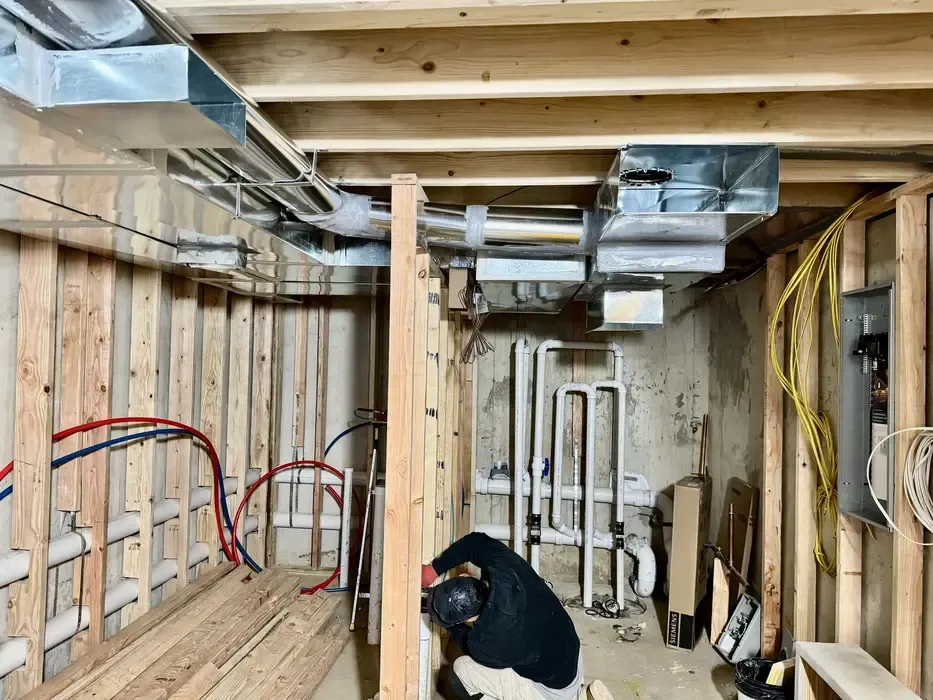
Mechanicals in the way. Ductwork, main stack, panel location, water heater, and the beam pockets. Rerouting these is real money. Building around them costs you headroom and floor plan.
Bedroom or not. A basement bedroom pulls in egress, and egress in an existing foundation wall means cutting masonry, excavating a well, and tying that well into drainage. It is a structural and site-work job before it is a window job.
Finish level. Carpet and painted drywall versus LVP, built-ins, coffered ceiling, and a wet bar. Same footprint, different planet.
What makes Philadelphia-area basements cost more than the calculator says
Three things show up over and over in this market.
Water first. You do not frame a wall in front of a foundation that leaks. Not once, not "we'll see how it does." One Pennsylvania contractor guide recommends budgeting 10 to 20 percent of the total for waterproofing and moisture control, and notes that skipping it can produce mold remediation and damaged finishes within a few years. I won't put a number on any specific house, but I will say this: the diagnosis has to happen before the estimate is meaningful, and any contractor who skips straight to finishes without walking the exterior grade, the downspouts, and the perimeter is guessing with your money. City of Philadelphia
Ceiling height. Older housing stock here often has basements that were never meant to be lived in. Once you frame a ceiling, run a soffit under a duct, and add a subfloor, you can lose several inches you didn't have to give. This can quietly kill a habitable-space plan after design is already paid for.
What's behind the wall.Knob-and-tube remnants, undersized panels, cast iron on its last decade, and mortar you can pull out with a screwdriver. In older Philadelphia homes, the demo phase writes the second half of the estimate — which is why any honest proposal on a pre-war house includes an allowance and a plan for what happens if it's spent.
Access. A rowhome with no exterior basement access means every stick of lumber and every bag of debris comes through the living room. That's labor hours, and labor hours are the budget.
Want a number for your actual basement instead of a national average? We'll walk it, look at the moisture picture and the mechanicals, and tell you what's realistic — including if the answer is "fix the water problem first and finish next year." Request a free estimate.
The line items people leave out
Estimates from different contractors are often impossible to compare because they don't include the same things. Common omissions:
Permit fees. Angi's Philadelphia page estimates permits add $200 to $1,000 to project cost, though the actual fee depends on your jurisdiction and declared project value — and Philadelphia's structure differs from what Bucks and Montgomery County townships charge. Custom Craft
Dumpsters and disposal.
Electrical service capacity. If the panel is full, that's a separate scope, and it's the kind of work that belongs to a licensed electrician under our trade services rather than something a general carpenter should be improvising.
Egress work, if a bedroom is in the plan.
HVAC extension or a dedicated system. Conditioning a basement off an already-marginal furnace usually doesn't work.
Insulation and vapor strategy, which is not optional in a below-grade wall assembly.
When you compare bids, put them side by side and mark which of these six appear in each. The cheapest bid is almost always the one that left the most off.
What you get back
Block Renovation cites the 2025 Cost vs. Value Report putting a midrange basement remodel at roughly 71 percent of cost recouped at resale on a national average job near $52,000, while the 2022 NAR/NARI Remodeling Impact Report put basement conversion to living area closer to 86 percent. Angi's Philadelphia figures put the ROI range at 50 to 75 percent. ZondaCustom Craft
Treat all of these as directional. Resale return on a basement depends heavily on whether the space feels like living space or feels like a finished storage room — light, ceiling height, and access matter more to a buyer than the flooring spec.
One thing that isn't directional: permitted work returns better than unpermitted work, and unpermitted work becomes a disclosure problem the day you list. A finished basement with no permit history is a negotiating lever in the buyer's hand.
How to use these numbers
Take the published ranges as a sanity check, not a budget. If a contractor's number lands far below every source above, the question isn't "why are they cheaper" — it's "what's not in this scope."
Get the moisture assessment first. Get the ceiling height measured after you know your floor and ceiling assemblies, not before. Decide on the bathroom early, because it changes everything downstream. Then price it.
If you're still deciding whether the basement is even the right project — versus building out — that comparison deserves its own conversation, and the honest answer depends on your lot, your grade, and what you actually need the space to do. We handle both basement finishing and home additions, which means we have no incentive to steer you toward one.
Ready to find out what your basement actually costs?Get a free estimate from Evolution 12— Philadelphia, Bucks County, and Montgomery County.
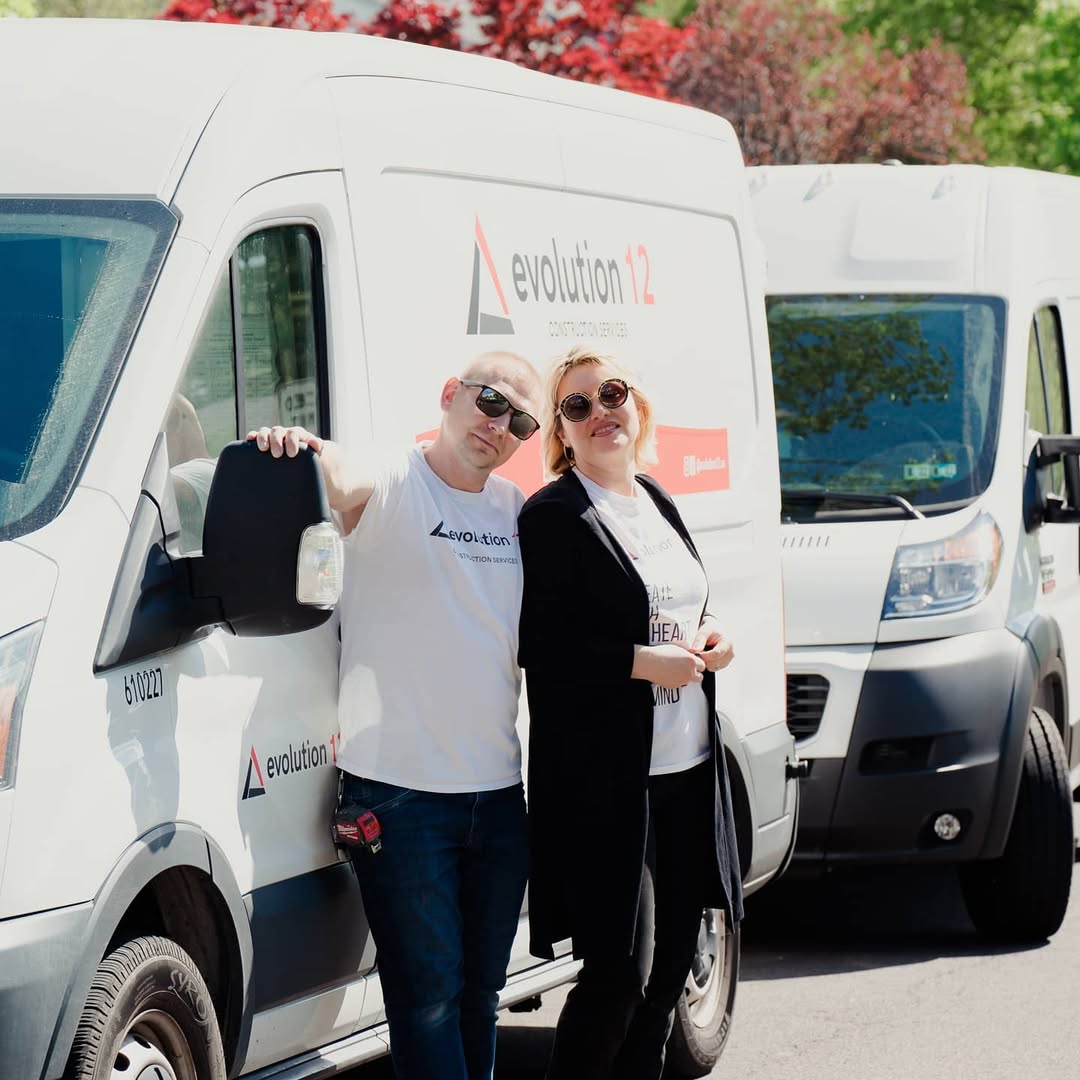
Kanstantsin Bychak is the owner of Evolution 12, a licensed general contractor (PA License #PA164463) based in Huntingdon Valley, PA, serving Philadelphia, Bucks County, and Montgomery County.